FREQUENTLY ASKED QUESTIONS (FAQ)
SNOW REMOVAL
1. What is the snow plowing trigger?
We will automatically come out when snowfall reaches 2 inches at your property.
This is measured either by on-site accumulation or trusted local weather data.
2. When will my driveway be cleared?
Our routes are organized by location for efficiency and safety.
You can expect your driveway to be cleared within 6–12 hours after the snowfall ends, depending on storm severity and route volume.
3. Do you plow during the storm or only afterward?
For long or heavy storms, we may perform multiple passes to keep routes manageable.
A final cleanup is always completed once the snow has stopped.
4. What if my driveway is steep or difficult?
We take extra care with steep or angled driveways. In heavier snow events, we may make several lighter passes to avoid equipment damage and ensure the best result.
5. Do I need to move my vehicles?
Yes, when possible. Clearing your driveway of vehicles allows us to plow the entire surface.
If vehicles remain, we will plow around them but may not be able to return once they’re moved.
6. Do you clear walkways?
Walkway clearing is only included if it was part of your quote.
If you’d like to add walkway service, just reply to this email and we’ll update your account.
7. What if the city plow buries my driveway after you’ve already serviced it?
If this is common on your street, let us know. We do our best to schedule routes around city plow times. Additional cleanup may require a return visit depending on workload.
8. Do you offer salting or ice management?
Yes — salting is available as an add-on and not automatically added to our base seasonal snow removal contract.
Our pricing is:
Standard driveway salt application: $45 per visit
Walkway salt application (if included in your service): $15 per visit
Salt can be added automatically after each plow or done only upon request.
9. What happens during extreme weather events?
If snowfall, ice, or wind conditions temporarily make plowing unsafe, we may delay service until conditions improve. Safety protects both our team and your property.
Lawn Maintenance
1. How often should my lawn be mowed?
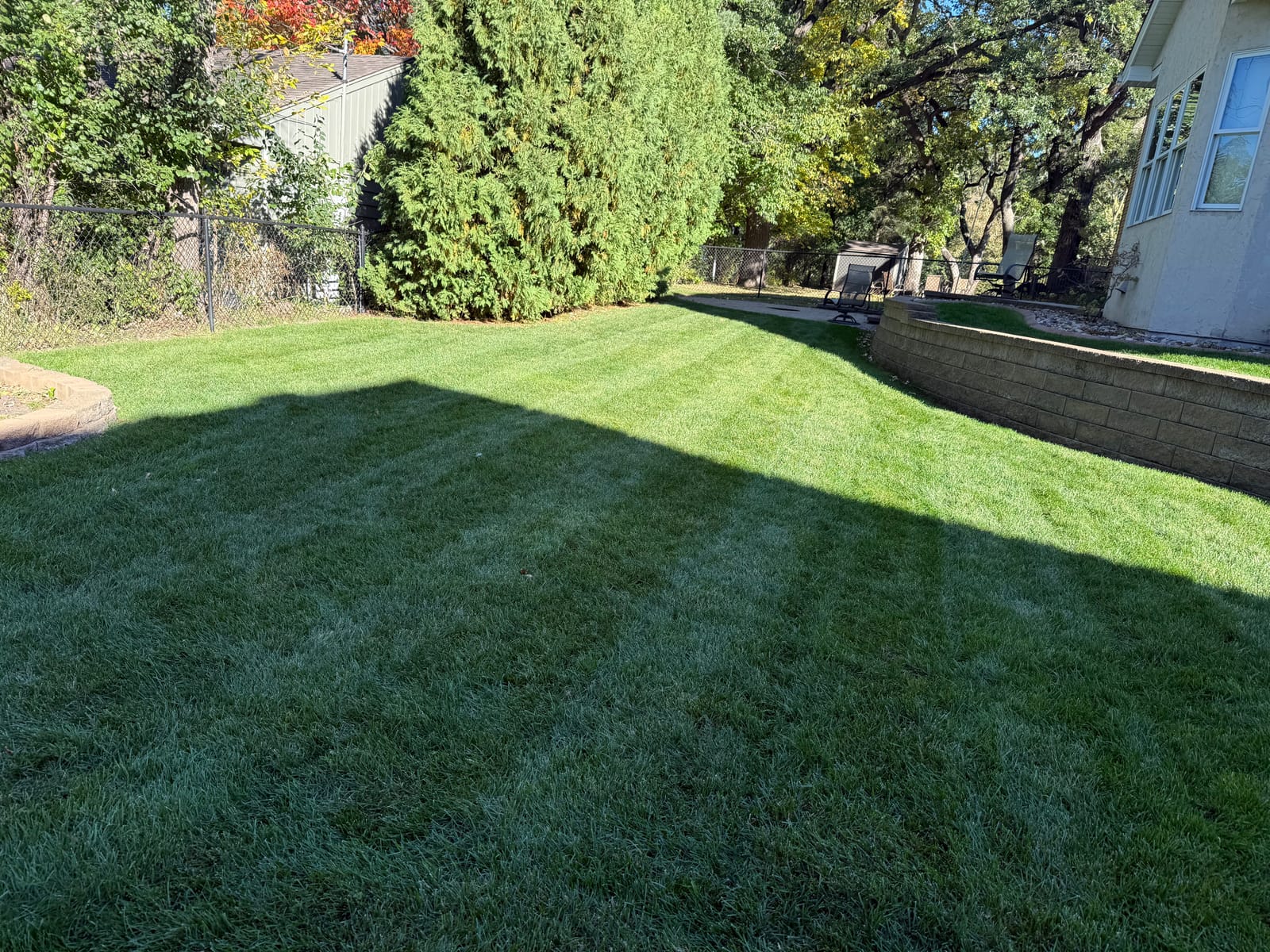
Most lawns in Minnesota perform best with weekly mowing during the growing season. In fast-growth months, we may recommend mowing every 5–7 days.
2. Do I need to be home during service?
No — as long as the property is accessible, we can complete the service without you being home.
3. What height do you cut the grass?
We typically mow at 3.5–4 inches, which promotes deeper roots, healthier turf, and better drought resistance. During the Fall and cooler seasons we will gradually lower the mow height down to 2.5 inches.
4. What if I forget to pick up dog waste or toys?
For safety/hygiene, we may skip certain areas. Excessive dog waste may result in a small surcharge or a rescheduled visit.
5. Do you trim, edge, and blow off surfaces every visit?
Yes — every mowing visit includes:
• Full mow
• Trimming around edges and obstacles
• Edging as needed
• Blowing off sidewalks, driveway, and patios
*Unless agreed upon by both parties*
FALL CLEANUPS
1. What does a fall clean-up include?
Leaf cleanup from the yard, beds, and hard surfaces, stick removal, mowing if needed, and bagging/hauling of debris.
2. How do you price fall clean-ups?
Pricing is based on property size, leaf volume, tree density, and the time required. Heavy leaf properties cost more due to volume and disposal time.
3. Why is the first visit more expensive?
The initial clean-up always involves more debris, more time, and more disposal. The second visit is a lighter touch-up.
Aeration & Overseeding
1. What Is Aerating and What Are Its Benefits?
Aeration is the process of removing small plugs of soil from your lawn to allow air, water, and nutrients to reach the grassroots more effectively. This is done with a machine called a core aerator, which creates thousands of small holes across the yard.
2. When is the best time to aerate?
In Minnesota, the ideal times are spring and fall when temperatures are cooler and grass can recover quickly.
3. Do you pick up the plugs after aeration?
No — plugs break down naturally within 1–2 weeks and help improve soil structure?
4. How soon can I mow after overseeding?
Wait 10–14 days after overseeding before mowing again to protect new seedlings.
5. Is there anything else I can do for my lawn?
Yes — dethatching is a great add-on.
Dethatching removes the thick layer of dead grass, roots, and organic material (called thatch) that builds up on the surface of your lawn. Too much thatch blocks water, nutrients, and air from reaching the soil.
Scheduling, Billing & All Other FAQs
1. What if it rains on my scheduled service day?
We will visit the following dry day. Heavy rain may shift the entire route by one day.
2. How do I pay?
We accept card, ACH, and auto-pay options. Invoices are sent after each visit or at the end of the month, depending on your service plan.
3. What if I want to pause or cancel service?
You can pause seasonal services anytime with 48 hours’ notice. Recurring services like mowing require notice before your next scheduled visit. Pausing or rescheduling may effect price depending on condition of lawn when resuming service.
4. Do you lock gates after service?
Yes — we always re-latch or re-lock gates exactly as we find them.
5. Can you work with fenced yards or dogs?
Yes, but dogs must be secured indoors or in a different section of the yard for safety.
6. What if I have irrigation or yard decorations?
Please mark or remove sensitive items. We are not responsible for hidden objects that cause equipment damage.